Taxi Getaway Map and Routes
City literacy for fares, robber getaways, races, and police pressure—speed alone will not save you.
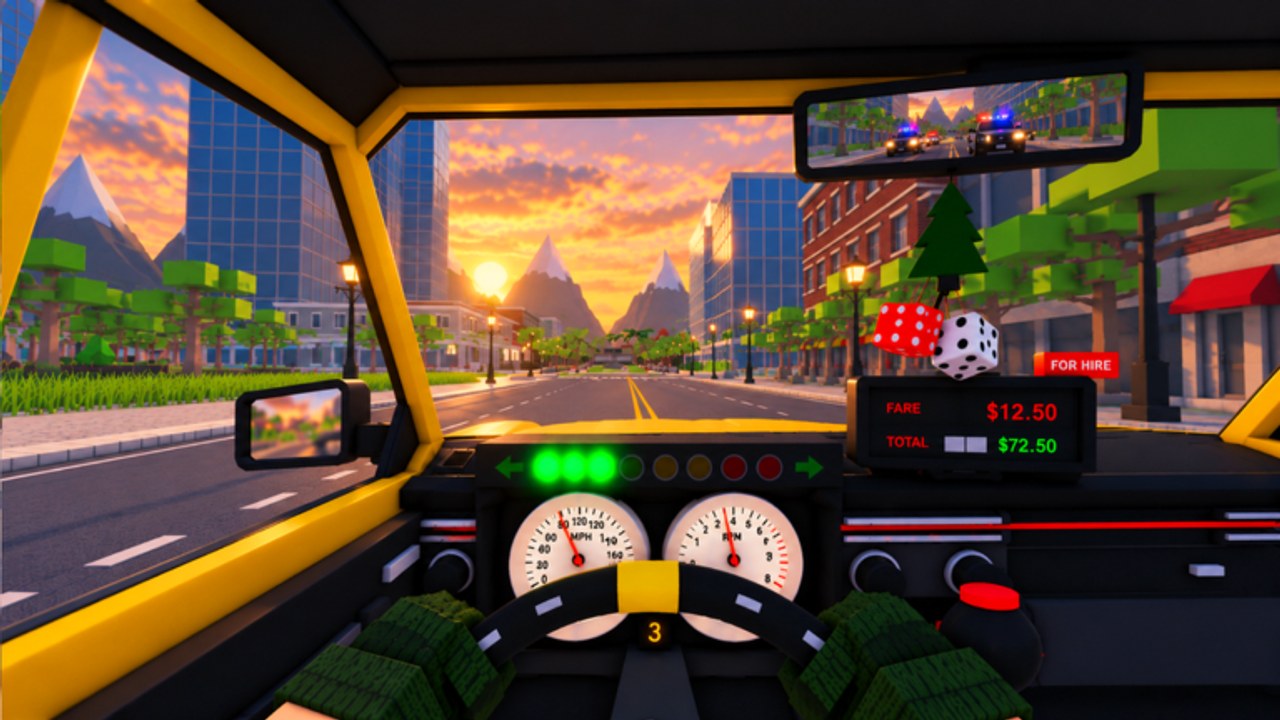
Taxi Getaway rewards drivers who treat the city like a toolkit. Garage Games shipped a dense playground on 28 October 2026, and by mid-November the place already crossed roughly one million visits with small servers (about six players). The loop never changed: pick up fares, risk robber double pay when you can escape, climb six cabs, run street races and dailies, open crates, or flip into police mode. What separates a sedan that survives heat from a supercar that still crashes is almost always route choice, not horsepower.
This guide is the map literacy companion to Getting Started, Escape police, Street races, and the taxi tier list. Read it when you know the HUD but still lose chases on the same boulevard every night.
Why map knowledge beats raw speed
A faster cab extends mistakes; it does not erase them. Long sightlines on main arterials let AI patrols and player cops in police mode hold contact. Alleys, underpasses, parking cuts, and block-grid zigzags break vision even when your speedometer looks average. Mid-ladder taxis that you can rotate cleanly through corners will print more double-pay cash than a supercar you cannot stop before a wall.
Use the tier list to decide when a cab is chase-ready, then use this page to decide where that cab should go. If you only follow the destination arrow, you never bank the side streets that win getaways.
Learn the city in three passes
Pass one — calm fare loops. Spend a session on normal passengers only. After each drop-off, take ten seconds to note one parallel street, one alley mouth, and one landmark silhouette (bridge, plaza, industrial stack, downtown glass). Do not accept robbers yet. This is the same discipline Getting Started asks for in hour one, extended into deliberate map notes.
Pass two — empty corridor drills. Without a fare, drive your favorite downtown block and force left-left-right patterns, handbrake snaps into ninety-degree exits, and recoveries after a soft wall kiss. Pair with controls so mobile or PC inputs do not fight the line.
Pass three — heat rehearsal. Take one intentional robber using the entry-turn / mid-maze / exit-to-drop structure from Escape police. Win or lose, write down where vision broke. That single note is worth more than another crate open.
Chase corridors that actually help
Think in corridors, not random turns:
- Entry corridor — The first committed turn after a robber boards. Pre-pick it before you stop for the passenger. Soft U-turns into oncoming traffic are panic, not plan.
- Mid chase maze — Chain of alleys and block changes that deny long mirrors. Alternate directions so predictors overshoot. Avoid circling one plaza until every exit seals.
- Exit corridor — Once contact feels broken, stop inventing maze and resume efficient progress to the pin. Endless freeroam fails the contract.
Downtown grids favor snap turns and short sightlines. Bridge and waterfront stretches favor speed but punish if a cruiser is already behind you—take the next side ramp early. Industrial alleys forgive mid-tier handling; open park loops look cinematic and usually get you boxed by player cops.
Drop-off habits that save time and heat
Clean fares teach the same geography getaways use. Build habits:
- Approach the pickup from a street that already offers two exits.
- Stop square; do not leave the cab nose-first into a dead end.
- While the passenger boards, glance at the destination district and pick a default first turn if heat starts.
- On normal fares, still practice one optional side-street detour so the path is muscle memory later.
- After drop-off, reposition toward dense fare clusters instead of idling in the open.
Players who only optimize arrow distance never rehearse the exits that matter when a passenger flips into a robber. That is why robber fare judgment and map literacy belong together.
Racing lines versus getaway lines
Street races want committed apexes, clean boosts of speed, and checkpoint efficiency. Getaways want broken vision and option density. Do not confuse the two. A race line that hugs a wide avenue can win a daily and lose a robber chase in the same night.
Use races to learn braking points and how your current cab exits corners. Then deliberately drive the ugly parallel alleys afterward so you own both toolkits. Daily goals that ask for races still fund the next rung on the six-cab ladder—just bank the handling lesson for heat sessions.
Police-mode scouting
One short police mode patrol teaches where fleeing taxis actually go. Bust a few criminals, note which alleys feel sticky, then return to taxi driving with those cut-offs in mind. In six-player servers, the same humans often rotate roles; camping a single meta loop stops working once everyone has read the same wiki page. Vary your mid-maze.
District checklist (practical, not a spoiler map)
Without publishing a fake coordinate dump, keep a personal checklist:
- Two exits from the busiest pickup cluster you use.
- One underpass or elevation change that breaks rear view.
- One industrial cut that mid-tier cabs can rotate through.
- One “do not enter under heat” dead-end you have already died in.
- One race route braking marker you trust on your main cab.
Update the list after every patch noted on the Updates Hub or the November 2026 snapshot. Handling tweaks change which corridors forgive mistakes.
Cab and route pairing
- Starter sedan — Maze-first corridors only; decline robbers that spawn on long boulevards with no immediate side street.
- Mid-ladder — Best classroom for aggressive routes; enough exit speed to rejoin the drop arrow after an alley chain.
- Top-end / supercar — Can break straights, but overconfidence creates high-speed wall kisses. You still need the same entry-turn discipline.
Cosmetics from crates do not alter corridors. Spend surplus on paints after the next unlock is safe—see money order in Make money fast.
Common map mistakes
Arrow slavery. Following the GPS line through every main road maximizes heat contact.
Same-block loops. Circling one plaza looks clever until patrols seal exits. Change districts.
Landmark blindness. If you cannot name two silhouettes near your favorite pickup, you are not ready to spam robbers.
Race brain under sirens. Wide apexes are for checkpoints, not for losing player cops.
Ignoring small-server traffic. Other taxis are moving props; plan corridors that still work when someone crashes in your lane.
Practice plan (twenty minutes)
- Two clean fares while naming exits aloud or in chat notes.
- Empty alley drill on one downtown block.
- One robber with a pre-picked entry corridor.
- Optional one-lap race to refresh braking points.
- Thirty-second garage check against the tier list before you chain more heat.
Related reading
- Escape police — chase pressure and recovery
- Robber fares — when to accept double pay
- Street races — structured routes and dailies
- Getting Started — first-session map habits
- Taxi tier list — which cab belongs on which corridor
- Guides Hub — full index
Map knowledge is the quiet upgrade that no crate can roll. Learn corridors on purpose, and every cab on the ladder feels stronger without a single Robux spent.
Frequently Asked Questions
Quick answers for Taxi Getaway drivers and chasers.
Does a faster taxi replace learning the map in Taxi Getaway?
No. Speed extends mistakes but long sightlines still lose getaways. Alleys, block changes, and pre-planned entry turns matter more than raw top speed.
How should new players learn routes?
Run calm fare loops first, drill empty corridors second, then rehearse one intentional robber using entry, mid-maze, and exit-to-drop structure.
Are race lines the same as escape routes?
Usually not. Races favor wide efficient avenues and apexes; getaways favor broken vision and option-dense alleys. Practice both on purpose.
How does police mode help map literacy?
Busting criminals shows where fleeing taxis hide and which cut-offs work. Bring that knowledge back into taxi sessions.
What should I re-check after a patch?
Whether your favorite corridors still forgive your main cab’s handling, and whether robber or race payouts changed on the Updates Hub.